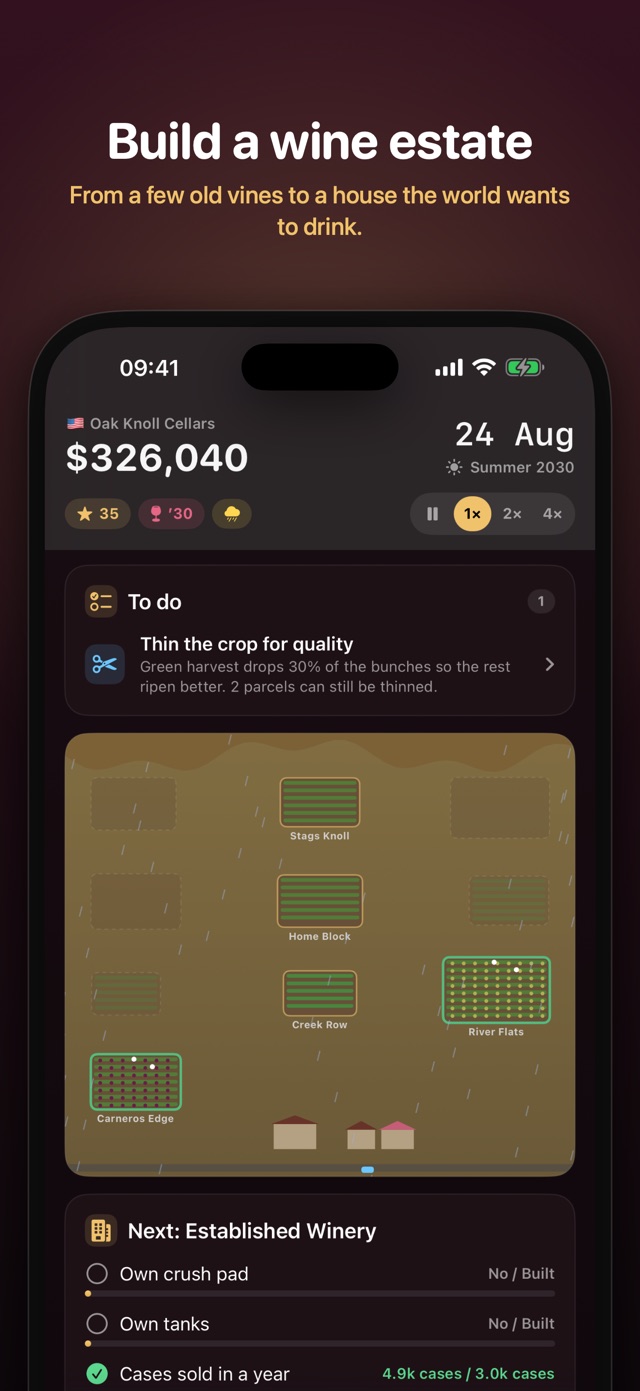
Vineyard Director is a wine growing game first: it simulates the farming year in detail. Vines change through the seasons, weather passes overhead, and every parcel has its own soil, slope and warmth. The decisions you make in the rows set the quality of every bottle that comes out of them.
The vine's year
The game follows the real calendar, flipped for the southern hemisphere. Budbreak comes in spring, then the frost risk, fruit set, véraison as the grapes change colour, and finally ripeness. Early grapes ripen first, late ones last. The harvest closes at the end of autumn, and anything still on the vine is lost.
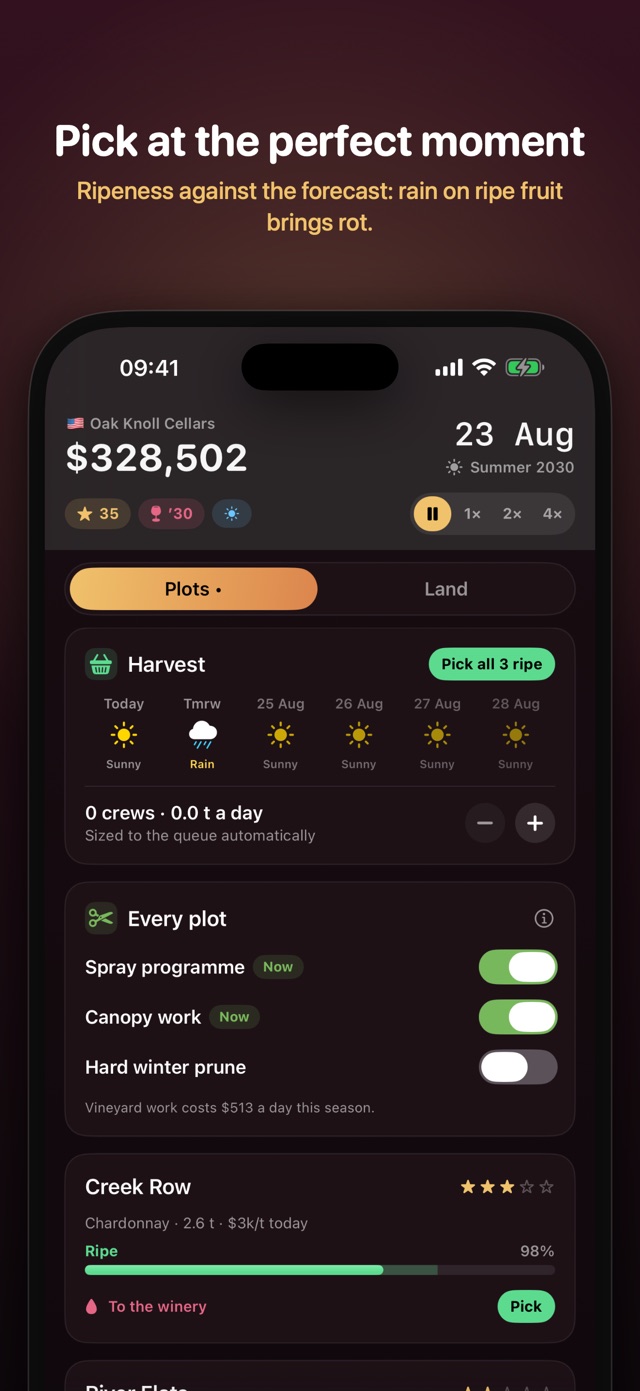
For each parcel you set standing orders and let your crews carry them out:
- Spray against mildew and rot. Unsprayed vines lose health on every damp day.
- Canopy work to lift fruit quality.
- Hard prune and green harvest to trade crop for quality on your best plots.
- Frost fans where the cold air pools.
Weather that matters
Every day brings sunshine, cloud, rain, a heatwave, frost or hail, and each can cost you. Spring frost can take a share of the crop, hail strips fruit and damages the vines, and rain on ripe grapes starts rot. Heatwaves cost you ripe fruit. Read the forecast, and when rain is coming, pick.
Ten real wine regions
Each region is its own game, with its own grapes, costs, climate and events.
| Region | Grapes you start with | Character |
|---|---|---|
| Barossa Valley | Shiraz, Grenache | 80-year-old vines and low costs; the easiest start |
| Napa Valley | Cabernet Sauvignon, Chardonnay | Expensive land, plenty of tourists |
| Marlborough | Sauvignon Blanc, Pinot Noir | Wines ready fast; watch the spring frosts |
| Mendoza | Malbec, Torrontés | The lowest costs; hail and the Zonda wind |
| Chianti Classico | Sangiovese, Merlot | Reds must age a year; wild boar in the vines |
| Rioja | Tempranillo, Garnacha | Crianza, Reserva and Gran Reserva |
| Bordeaux | Cabernet Sauvignon, Merlot | Sell en primeur while the wine is in barrel |
| Douro Valley | Touriga Nacional, Tinta Roriz | Steep terraces that cost more to work |
| Champagne | Chardonnay, Pinot Meunier | High costs and 15 months in the cellar |
| Mosel | Riesling | Slate slopes, high costs and the chance of Eiswein |
Grow the estate
You start with two parcels of someone else's vines. From there you lease planted land, buy parcels, or plant your own vines from 19 grape varieties. New vines take two years to reach a full crop, and old vines make the best wine: quality keeps rising until the vines are 20, with a further bonus at 40. Plant a grape that suits a site's warmth, or quality suffers.
Then make the wine
The harvest feeds your winery. Crush, ferment, age in steel or oak and face the critics, then sell at the cellar door, through distributors and abroad. Read more about the wine making side of the game.
On Android and iPhone
Vineyard Director needs Android 12 or later, or iOS 26 or later on iPhone. It costs $2.49 on Google Play and $2.99 on the App Store in the US, once. There are no in-app purchases, no ads and no tracking, and it never needs the internet.
It runs in real time while you play, at up to 4× speed, and it pauses when you close it. There is no offline progress, so a frost never hits while you're away.
Frequently asked
Is it realistic? It is a game, so it simplifies, but it is built on how vineyards really work: warmth bands for each grape, vine age, disease pressure, weather at harvest and the trade-off between yield and quality.
Which region is easiest? The Barossa Valley. The beginner's guide walks you through a first vintage there.
Can I lose? There is no game over. If the money runs out the bank steps in with an emergency loan, at a cost to your reputation.