Most wine games stop at the vineyard. In Vineyard Director the harvest is only the start: every parcel and every vintage becomes its own wine, and how you make it decides what it scores and what it sells for.
From grapes to bottle
Each wine follows the same path a real one does, and you make the calls at every step.
- Crush and ferment. Picked fruit goes to the crush pad, oldest first. Reds ferment for 14 days, whites for 21. Fruit left waiting in the bins loses quality every day, so plan the harvest around what your winery can handle.
- Choose the vessel. Steel tank keeps whites like Sauvignon Blanc and Riesling fresh. Used oak and new French oak lift the grapes that love oak. New French oak gives the most, at $1,100 a barrel.
- Age it. Each grape has an ideal time in the cellar. The wine improves up to it, and past one and a half times that it starts to fade. In Rioja and the Douro, reds aged long enough become Crianza, Reserva and Gran Reserva.
- Blend, or don't. You can blend two wines, but the blend takes the younger wine's age.
- Bottle it. Bottle by hand or let the cellar bottle each wine when it is ready.
The critics decide
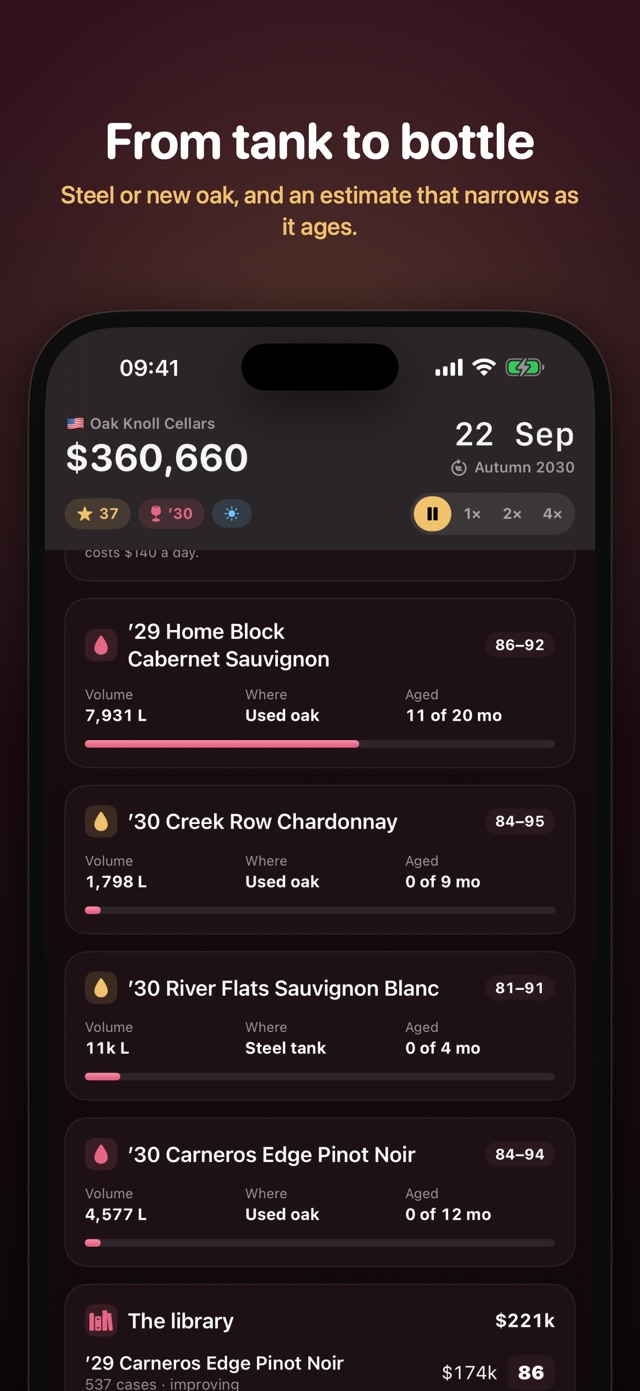
While a wine ages you see only the cellar's estimate, a score range that starts about five points wide and narrows as the wine matures. On bottling day *The Cellar Report* gives the real score, anywhere from 75 to 100.
That score moves everything. Each point adds about 10% to the wine's price, every bottling shifts your reputation, and the best wines win medals at the spring show. Our guide to getting 95+ critic scores explains what goes into a great wine.
Then sell it
A wine making game is only half the story if you can't sell what you make. Vineyard Director gives you plenty of ways to sell your wine:
- Sell to the trade for quick cash, or sell in bulk.
- Open a tasting room and set your own cellar-door price.
- Grow a wine club, sign distributors and ship to importers in five countries.
- Build guest houses, and a restaurant that sells your wine at twice its list price.
- In Bordeaux, sell half a vintage en primeur while it is still in barrel.
Build your own winery
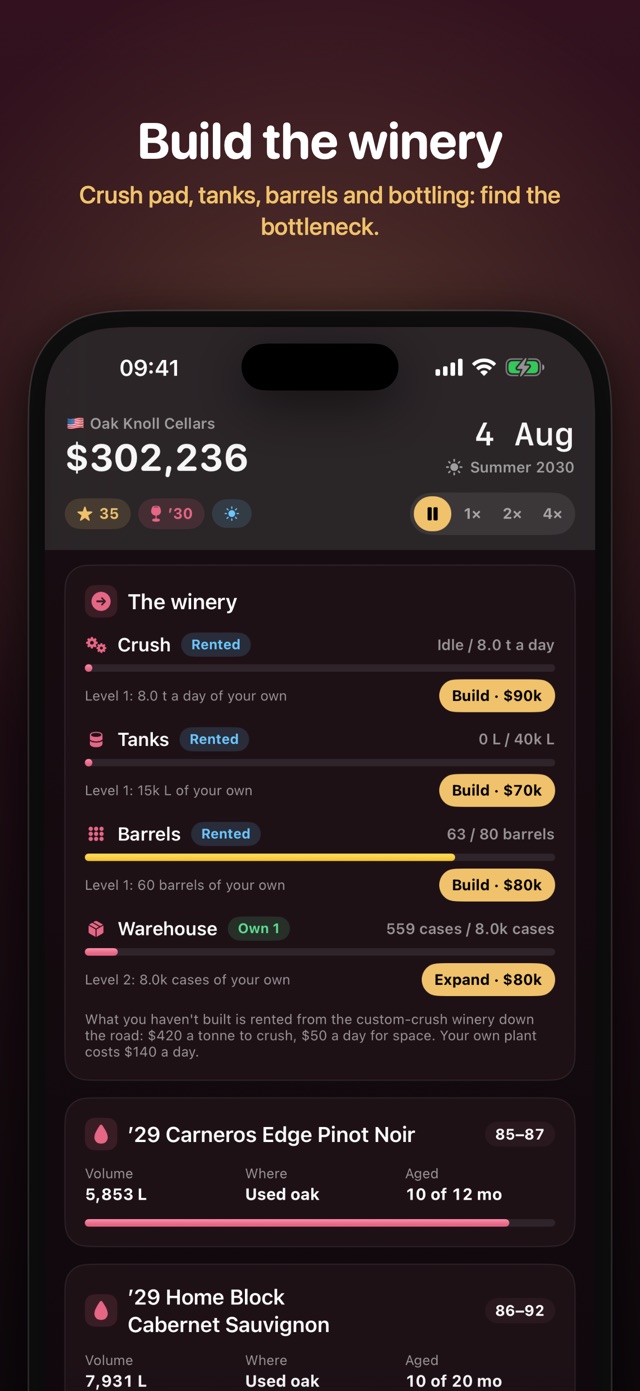
You start by renting a crush, tanks and barrels. As the estate grows you build your own crush pad, fermentation tanks, barrel cellar, case warehouse and bottling line, plus a sorting table and temperature control that make every wine better. Hire a Winemaker for a further lift in quality.
On iPhone and Android
| iPhone | Android | |
|---|---|---|
| Needs | iOS 26 or later | Android 12 or later |
| Price (US) | $2.99, once | $2.49, once |
| In-app purchases | None | None |
| Ads | None | None |
| Internet | Not needed | Not needed |
There are no accounts and no tracking, and your estates are saved on your phone. You can run several at once, each with its own save.
Is it an idle game?
No. Vineyard Director runs in real time while you play, at 1×, 2× or 4× speed, and stops when you leave. Nothing happens while the app is closed, so you never come back to a ruined harvest. The clock slows down automatically when fruit is ripe, so the big decisions never rush you.
Frequently asked
Do I need to know about wine? No. The game explains each step as you reach it, and the cellar's estimate shows what your choices are doing to a wine before it is bottled.
How long is a game? As long as you like. A year in the game takes about 24 minutes at normal speed, and the climb from Garage Winery to Icon Estate takes many vintages. Five scenarios set specific goals if you want a target.
Where do I start? Read the beginner's guide and found your first estate in the Barossa Valley.